Osaka Gig and New Track

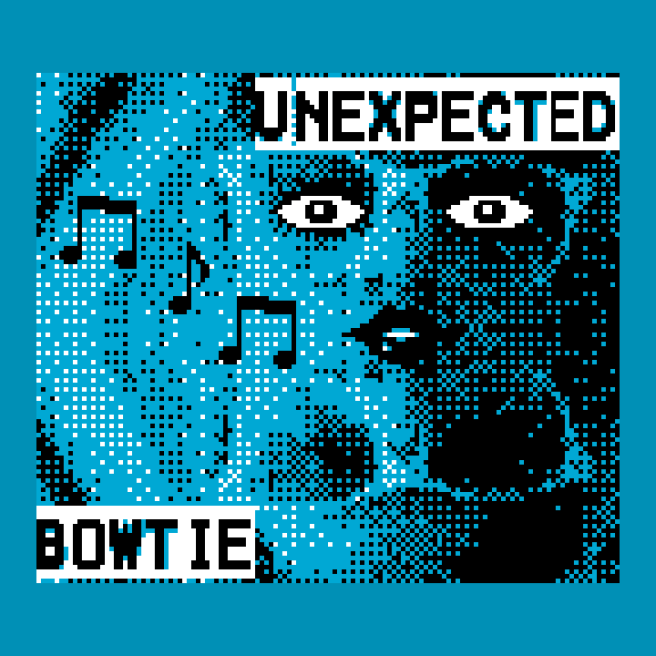
unexpected bowtie live Osaka poster

I’m going to be in Japan in the next couple of weeks, and have confirmed my first live outing as unexpected bowtie, at Space Station in Osaka, which is apparently in the ‘Top 30 Recommended Sights of Japan as Chosen by Foreign Visitors‘. The set will be stripped down to a single Game Boy only, given that we are travelling, so should be something a little different. If you happen to be in the area, it’d be awesome to see you there!

chiptune - portable rig

To mark the occasion, I’ve written a new track that’s up now on Soundcloud. Composition wise, it’s just a single Game Boy, with a tiny little added bit of Commodore 64, and extra drums. Enjoy!

cup fungus – defame the dead

defame the dead

Following on from the release of drouth, I found a new project quickly formed and gathered steam. Rather than use Game Boys to compose, I started exploring different electronic instruments. The result was a much more unpredictable, experimental, and far noisier sound than I’ve had before. That shift meant that it didn’t quite feel like an unexpected bowtie album, and so I’ve chosen to release it under a different name: ‘cup fungus’.

Today is the official release date where it crashes angrily into the world.

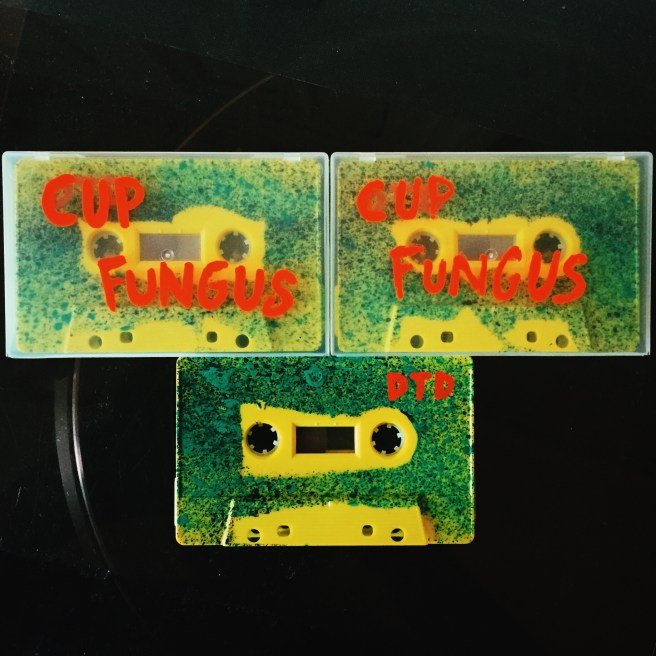
You can download the album for free on Bandcamp, or stream it via Spotify as of right now (search ‘cup fungus’). If you are interested in something a bit more physical, there are also an extremely limited number (only five!) of hand painted cassette tapes available from my label – cow tongue taco records.

cup fungus cassette.jpg

New Track: MTL

Over the past couple of months I’ve been acquiring different bits of gear in a sort of obsessive kleptomaniac fashion to build upon the basic foundations of chiptune, and explore the different things I can do with it. As part of that, I’ve gotten a bunch of cool (and definitely not cheap) hardware sequencers… but I find myself constantly coming back to the Game Boy.

Musicians in the chiptune world often talk about the limitations of the console as one of the things that inspires them. For me, it’s probably the opposite: I am amazed at just how powerful these old handhelds can be, controlling all sorts of different gear. Primarily though, I just love composing on LSDJ.

The natural progression from drouth feels like it lies in an album that still has its roots firmly in the chipmusic world (composed entirely on a Game Boy – with the DMG sounds in the mix) – but with a deeper electronic influence, with the handheld sequencing other synthesisers to a greater degree.

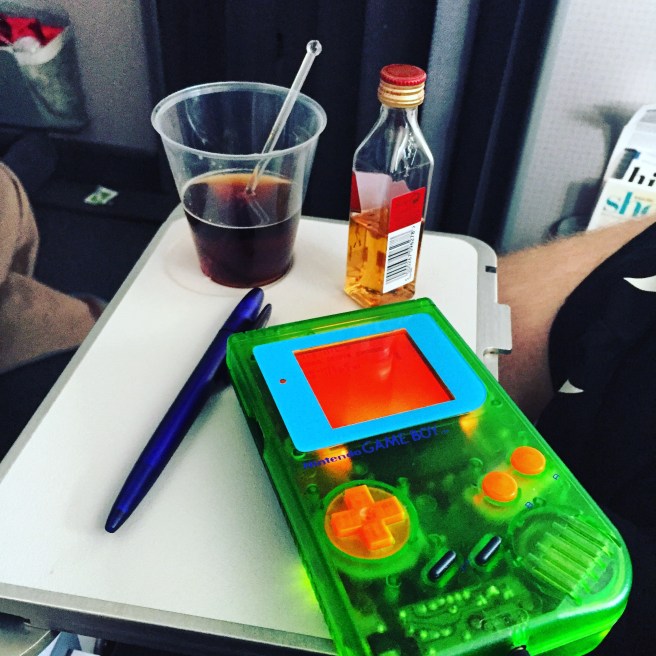
Game Boy on Plane

I visited Montreal recently, and composed a track on the plane rather than watching the same old terrible TV re-runs that were available (another plus for the Game Boy there in its portability…). When I got back to Glasgow, I put it all together and recorded it. Have a listen below:


mexxed again

When I was recording drouth, there were a bunch of tracks that I wish had vocals, but that I couldn’t quite come up with something on my own. In the end, it worked out for the album that they remained largely instrumental… but I thought it would be cool to get some different folks to do their own take on vocals.

As part of that, musician pal Christy Scott lent me her voice for a couple of tracks. Ultimately, the idea is to release all of them as a collection. For now though, here’s a new version of ‘mex’, with Christy on vocals. I think it sounds pretty great…

You can download it here. (right click > save as).

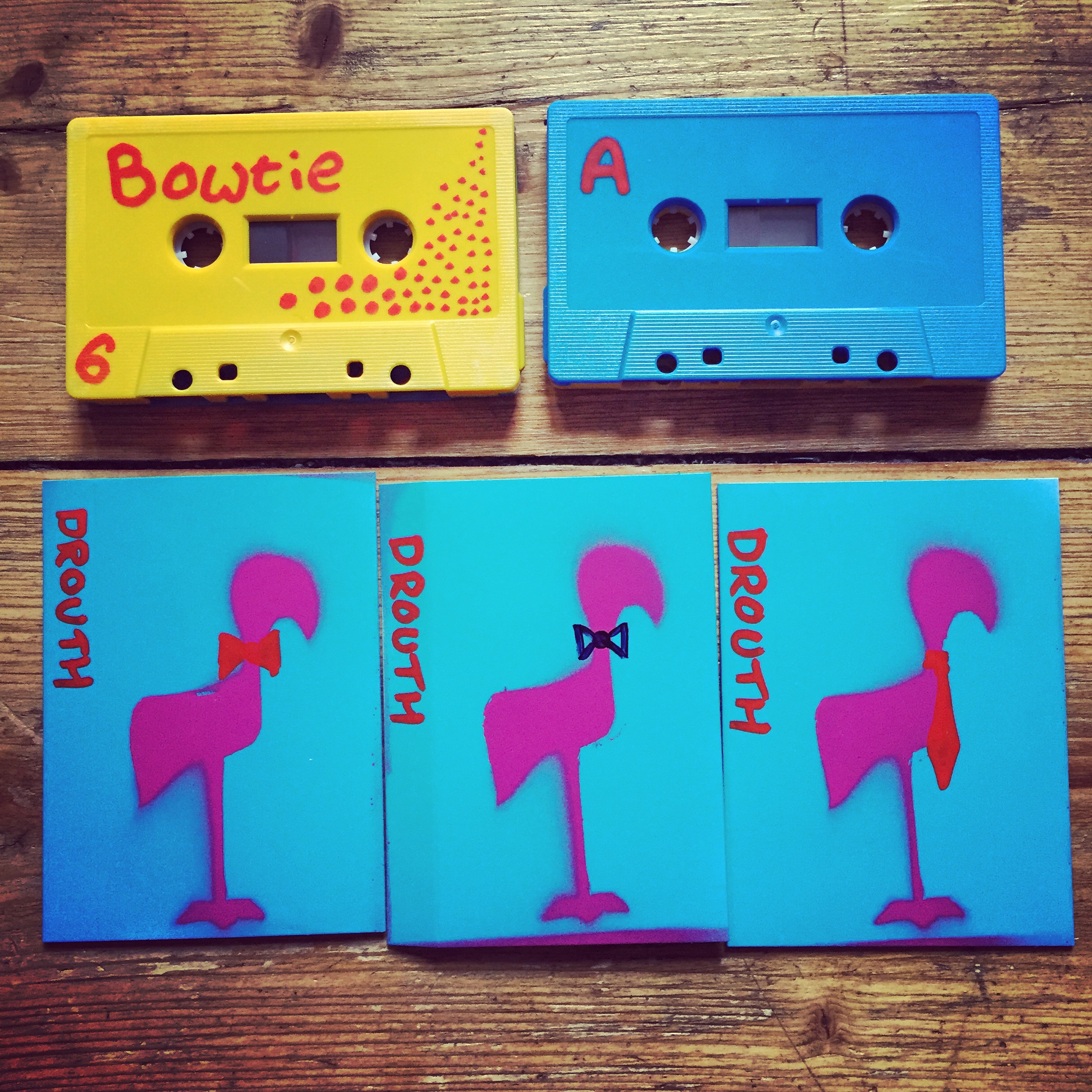
New Album: ‘drouth’ released today.

Today I’m releasing my first album since 2012, and the first one that’s mainly chiptune based since 2011: ‘drouth’.

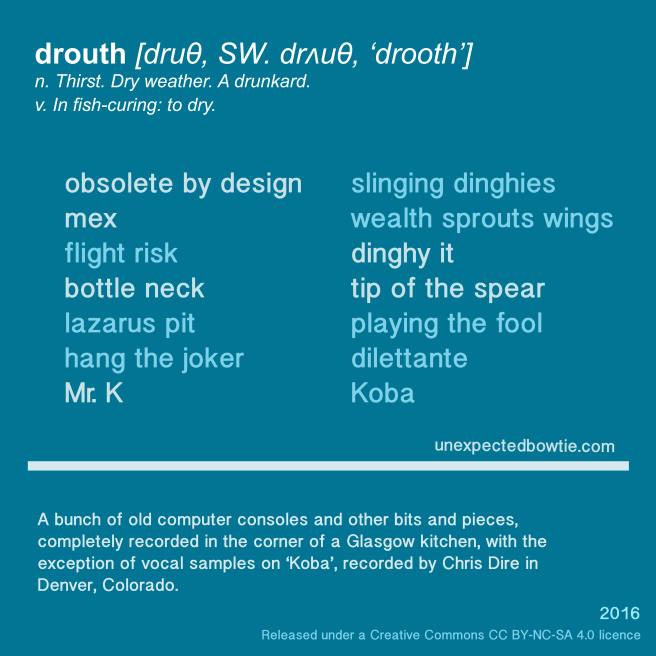
drouth album cover

The album is entirely composed on LSDJ using a bunch of different modified Gameboys, which were then in turn to control different instruments like a Commodore 64, Volca Bass, etc that play additional parts to give a much deeper sound. Along with a smattering of guitar and vocals, it’s much more an experimental (sometimes ambient) electronic album than a chiptune focussed one.

Unlike previous occasions, I’ve spent a lot more time putting the pieces together for this, even re-mastering the entire thing a few days ago when I realised that the original left the Gameboy sounding a little bit too harsh.

You can download it in full, for whatever price you choose, over at bandcamp – or stream at the bottom of the page.

Tracklist is as follows:

  1. obsolete by design
  2. mex
  3. flight risk
  4. bottle neck
  5. lazarus pit
  6. hang the joker
  7. Mr. K
  8. slinging dinghies
  9. wealth sprouts wings
  10. dinghy it
  11. tip of the spear
  12. playing the fool
  13. dilettante
  14. Koba

drouth album back cover.png


Calculator Music with Houston Tracker

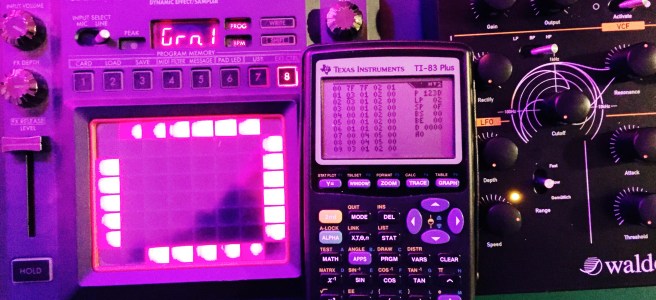
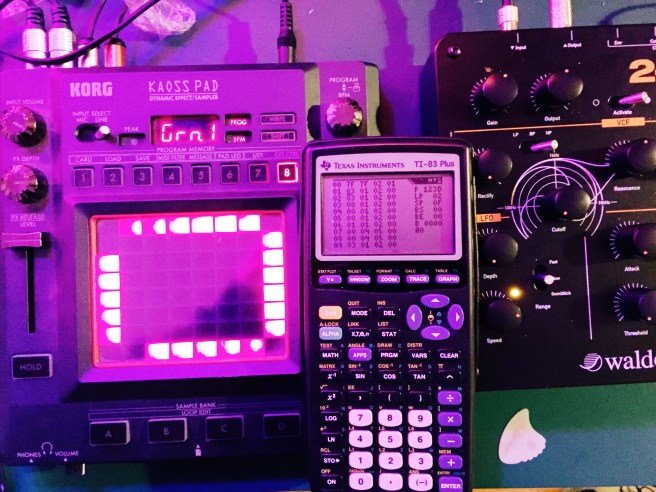
Not too long ago I read about how some genius called ‘irrlicht project’ had hacked old Texas Instruments graphing calculators so they could be used to make 1-bit music. Naturally, I had to have a bash at this myself. There’s something particularly special and rewarding about being able to compose whole tracks on devices that were never intended to work that way.

The models that support the ‘Houston Tracker‘ software are seemingly everywhere in the US, as they were apparently a mandatory purchase for many schools. That means they can usually be picked up fairly cheap second hand over there. However, as it turns out, these weren’t all that prevalent in the UK, so they are still fairly pricey – coming in at around £30 on eBay.

I finally got an okay deal though, and got to work getting Houston Tracker onto the device. It’s not all that straightforward, as you need a specific kind of cable – which costs almost the same as the damn calculator. Importing one from America worked out to be the most cost effective route in the end. Installation wise, there’s a lot of fiddling about to get the dependencies right on OSX, unless you use MacPorts – which saved the day. Once it was all up and running though, it was pretty good fun to use – with a whole host of features that I didn’t expect.

ti83plus.jpg

I recorded a fairly simple tune to find my way around the controls, and decided to record it. The raw calculator sound was a bit too bare for my tastes, so I threw in some minimal effects and overlaid some glitchy guitars/harmonised vocals. Here it is, my first calculator music track:

Patchblocks as Effects Processor

Recently I came across a modular synth system called Patchblocks, and thought I’d give it a bash, as the components themselves weren’t too expensive.

The idea is pretty simple, but deceptively powerful. Essentially you get various inter-connecting blocks that all have two nobs and two buttons, as well as stereo audio out/in ports. By connecting them up to a computer via USB you can use dedicated software to program them to do a whole host of different things, such as simulating drum beats, or acting as effects processors. The latter is what I am particularly interested in.
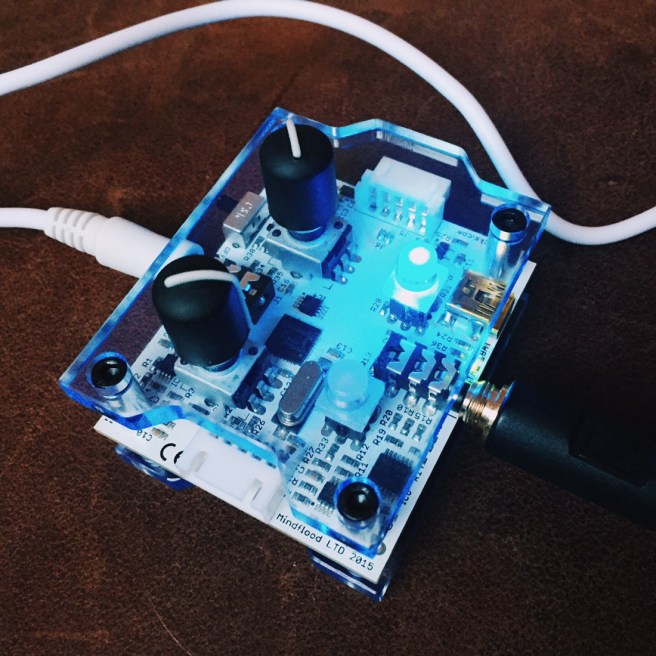
The device itself is pretty sweet, and doesn’t take up too much room, with a footprint just over the size of a credit card. I plucked for the clear blue plastic version, which apparently glows in UV light… you know… for all those times I’ll be playing live.

The build quality is good, and despite an exposed PCB on the sides, it feels pretty solid.

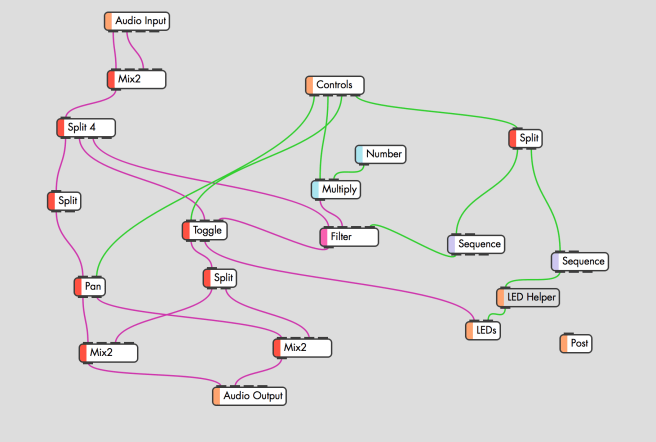
The coolest thing about these blocks is that you can set it up in whichever way suits your workflow best, rather than just ‘making do’ with workarounds. I’m always on the look out for different audio effects, and one of the things I miss when recording is having a hardware panning control. Sure, I could always just make use of a MIDI controller, but that still routes into Logic’s automation feature, which has never quite agreed with me. So, I set up one of the knobs to correspond to audio panning. That left me with two buttons and one knob free. I added in a filter, with the remaining knob controlling the frequency, and the right button switching through between High-Pass, Low-Pass, etc. The other button I set up as a bypass, so when it was ‘on’, the filter was active. The LEDs also correspond to the particular different modes.

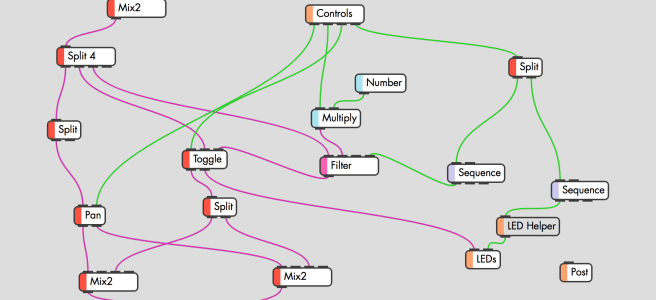
Here’s what that all looks like in the patchblocks software:
Screen Shot 2016-02-19 at 17.19.58.png

It looks complicated, but it isn’t really when you get used to it. Just like that, I have an effects unit that’s customised to do exactly what I need, and which I can modify at any point. Pretty cool.

If you’ve got a patchblock yourself you can check it out here. You’ll need the custom ‘LED Helper’ block that you can get on the Community download section of PB.

Sadly the block I received seemed to have a dodgy output when the audio input circuit was running, so I’ve sent it back for a replacement. The PB people couldn’t have been any nicer about it though, so I’m looking forward to testing it out properly when it comes back.

If you like hardware controls, but want to be able to fulfill a host of different functions in just a few boxes, check out the patchblocks. If you’re into the synth side of things more than the effects, there’s even a dedicated block to provide MIDI DIN in/out functionality. That’s something I might have to explore at a later date.

Update: I got my replacement unit back, and whilst some of the artefacts have been cleaned up, the quality is still noticeably worse than the input. It looks like it’s down to the sample rate of the unit itself, which is a shame – as it limits their usefulness as effects processors.

New EP: ‘really something’

After the last few posts concentrating largely on gear and production stuff, it’s good to be able to follow up with one centred on music.

I had planned to wait until I had an album together before releasing anything, but it became clear that a number of the earlier tracks had a sound that naturally branched off in a group. As a result, my first release in 4 years will be a 5 track EP titled ‘really something’. I can’t quite believe it’s been that long, but there we go.

albumcover.png

The tracks themselves are all fairly laid back, and stripped back a lot from my previous sample-heavy chiptune releases. The only time the pulse really increases a shade is on ‘Down Street’, a track which previously only ever featured on the ‘Relycs‘ collaborative release that was put out on cassette, and dedicated to abandoned tube stations.

It feels like a nice transition. Listen out for my pal Haigie’s laugh on track 5.

The whole thing is up to stream/download for free over on bandcamp.


Tracklist:

  1. more is less
  2. out of milk
  3. gender neutral robot
  4. Down Street
  5. more is more